It’s Not Just Minecraft! Universal Hosting for Valheim, ARK, and GTA FiveM—Unified Management from a Single Dashboard
To be honest, when I first started running game servers, my mindset was quite limited.
I basically focused on setting up a server for a single game—one world, one configuration, one style of play. All issues were addressed within that single, isolated environment.
However, as the player base grew, things became more complex. Some players wanted the cooperative exploration and survival of Valheim; others preferred the intense survival and taming mechanics of ARK; while some leaned toward the open-city roleplay servers of GTA FiveM.
That was when I truly realized that server operations weren’t just about managing a single game—they were about the unified management of multiple games.
It was during this phase that I discovered Shockbyte and began using it as a multi-game hosting ecosystem, rather than just a simple game server tool.
I. Scaling from a Single Server to Multi-Game Needs
Initially, my server setup was very simple: a single survival game with a few added gameplay features.
But as the player count rose, demands diverged. Some players wanted slow-paced exploration, others sought high-intensity combat, and some wanted to experience completely different types of open-world gameplay.
Consequently, the server expanded to support multiple concurrent modes—such as Valheim’s exploration-based survival, ARK’s taming and survival systems, and FiveM’s urban roleplay systems.
At first, I tried managing all these modes within a single environment. The result was chaotic configurations, interference between games, and skyrocketing maintenance costs.
I eventually realized the problem wasn’t the difference in game genres, but the lack of a unified management system.
II. The Valheim Server Experience: Handling the Load of a Distributed World
When I first set up a Valheim server, I underestimated its complexity.
Unlike traditional survival games, its core mechanic isn’t about gathering players in one place, but encouraging them to explore independently and spread out.
This means the server must maintain the state of multiple areas simultaneously, rather than operating around a single central point.
The more dispersed the players, the greater the load on world loading; this structure places high demands on server stability.
In a standard hosting environment, this type of operation often leads to latency spikes. However, in the hosting environment provided by Shockbyte, resources are isolated between instances. This made a noticeable difference in stability: even when players were exploring far apart, they didn’t negatively impact each other’s performance.
III. ARK Server Experience: Real-World Testing Under Sustained High Load
ARK was one of the first games where I truly experienced the impact of “sustained load pressure.”
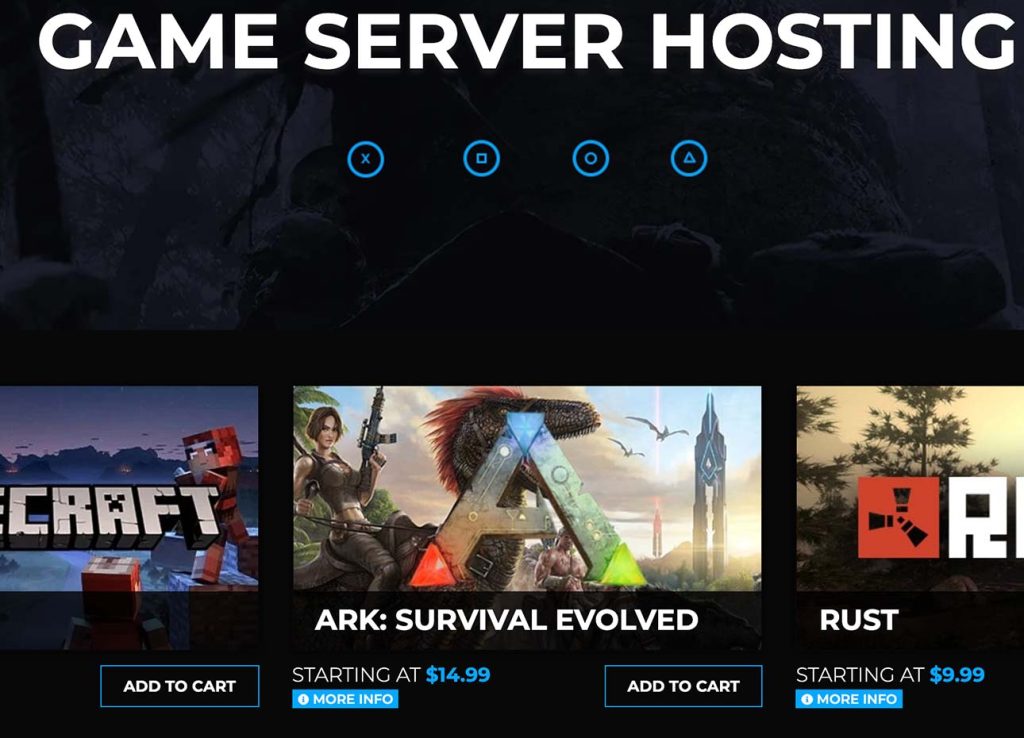
It relies not only on player activity but also on extensive AI behavior, environmental simulations, and continuous world updates.
Even when player counts are low, the server constantly processes complex logic; this sustained load places high demands on performance stability.
On lower-end setups, such loads often lead to accumulating issues, eventually causing stuttering or even crashes.
However, in Shockbyte’s highly stable hosting environment, what stood out to me was that “time didn’t degrade the server’s performance.” It didn’t suffer from progressive lag over long periods of operation but maintained a relatively stable state—a crucial factor for long-term servers.
IV. GTA FiveM Experience: From Game to “Online System”
FiveM is the most unique of the three; fundamentally, it is less of a traditional game server and more akin to an online urban system.
It incorporates economic systems, character systems, mission frameworks, and extensive scripting logic.
When setting it up for the first time, my main impression wasn’t just complexity, but the sheer number of “structural layers.”
Many issues stemmed not from raw performance, but from script conflicts or incorrect loading sequences—problems that are difficult to resolve through simple tuning.
In this context, the value of a unified backend for multiple games became obvious: I could manage all server instances from a single control panel without switching between environments.
Shockbyte’s design in this regard saved me a significant amount of time on switching tasks and troubleshooting.
V. Real-World Impact of Unified Backend Management
Running Valheim, ARK, and FiveM simultaneously, the most noticeable change wasn’t in performance, but in management workflow.
Previously, each game required a separate maintenance system—separate logins, troubleshooting processes, and issue resolution workflows.
With the unified backend, however, these servers became distinct instances within a single system, allowing for centralized monitoring of status, logs, and resource usage.
The biggest shift in the experience was the reduction in management overhead, rather than just a boost in speed.

VI. The Essence of Multi-Game Hosting: Unified Logic, Not Just Running Multiple Games
I eventually realized that the core of multi-game hosting isn’t about “how many games can run,” but rather “whether different games can be managed using a unified logic.”
After all, whether it’s Valheim, ARK, or FiveM, they all fundamentally require startup management, resource allocation, log monitoring, and backup mechanisms. Only when these underlying operational logics are unified does the game itself truly become “content” rather than a maintenance burden.
Transitioning from Single-Server to Multi-Game Systems
In moving from managing a single server to overseeing multiple games simultaneously, I came to realize that the core of server operations isn’t the game genre itself, but rather the unification of the management system.
The greatest value Shockbyte offers is the integration of these previously fragmented server setups into a single, unified backend. Once management is centralized, complexity actually decreases, transforming the servers from a collection of independent projects into a cohesive, controllable system.
This is the true significance of multi-game hosting.